Thursday, July 30, 2015

WGT Vol. 7: 4th Day of July

50 Years Dead

One of my favorite things about being a Deadhead is complaining about the Grateful Dead. So while I found the Fare Thee Well shows thoroughly enjoyable, let's get down to brass tacks. We all had Jack Straw as the opener on July 4th, right? 

I would consider Jack Straw the ultimate Grateful Dead show opener, and one of their greatest songs, falling just outside of my top five (China>Rider, Terrapin, Wharf Rat, Ripple, St. Stephen. Yeah, China>Rider counts as one.). Such classic American imagery, and the "Leaving Texas, 4th day of July" line would seem to make perfect sense for the Independence Day show opener. But the Grateful Dead always did have a tendency to confound. So after kicking things off on the 3rd with Box of Rain (who called that?), they busted out their finest show opener to kick the run off properly. In my mind, Box served more as a reprise of the last song played together at Soldier Field, a flashback to where they left off rather than the beginning of the show. And kind of a warm-up, a la Let the Good Times Roll


So even though few expected it, Jack Straw was the perfect choice. Such a classic Grateful Dead tale, somewhat self-mythologizing, like many of their great songs, without overtly identifying with the symbolism, a la Truckin' fer instance. Their tale of life on the road, the good times, the lines crossed, the struggle. Also a nice bit of coincidence that this aptly titled volume of my compilation, which I put together several years ago with no plans for release, ended up being put out in July, during with the final shows. More on Jack Straw below.


My only other gripes would be that they left off a few of the classic songs in favor of some lesser tunes. Some people may same the same about this compilation. Beat it, nerds. We knew it wouldn't be possible to squeeze them all in, but it sure seemed like there was time for Goin' Down the Road before Not Fade Away. And no Ramble on Rose? Another classic, triumphant dose of Grateful Dead Americana, left on shelves collecting dust. Maybe the song is too identified with Garcia, and no one else could pull it off, but what a moment it would have been in the crowd to join together on "take me to the leader of the band!" I would've even been down for a Trey midi-trumpet solo. More Ramble on Rose discussion below as well, but I've really been digging the imagery conjured in these lyrics:


Just like Mary Shelly, just like Frankenstein,

Clank your chains and count your change and try to walk the line.


The idea of the monster within us awakening, trying to break free, while still trying to fit into society. Something along the lines of to live outside the law you must be honest, maybe. At least that's what I'm getting from it right now. What a freaking great song. My kids quote the lyrics from time to time. Got them brainwashed already.


As for the rest of Fare Thee Well, they played pretty much five normal Grateful Dead shows. Standard first and second sets for the most part. Drums and Space at every show. You could barely get a second encore out of them on the last night, but what a doozy it was. Not a dry eye in the place, I'm told. What, no, I didn't cry. Not me, never, never. They stuck to the script doing what they do best. A formula, but one that works well. And although I was never as enraged at Pete Shapiro as others seemed to be, I did become more convinced through the whole ordeal that he was a bullshitter in way over his head. In the end, the music was great, a fun celebration, and he pulled it off, even if a significant portion of the fanbase was alienated in the process. But he's a true Deadhead, man... I believe the expression is, pound sand.


Enjoy this month's installment of mind derangement. Previous editions are in previous blog posts. You know where to find em. Give it a listen before you read below. Or don't. It's your life man, makes no difference to me. I'm really not sure if anyone is reading or listening to this stuff at all. 


Seriously, is anyone out there? Hello? Hello?


Disc 7: 4th Day of July

Most of THIS DISC is comprised of the late 70's and early 80's, a time that found the Dead at a crossroads.  Unsatisfied with Keith's playing, due to his insistence on only playing piano, frequent nodding off, and tendency to mimic Jerry's leads, he would be ousted after 1978, along with Donna.  Brent Mydland would join, to replace them both, I guess.  Kind of a strange choice, both musically as well as his personality.  He could play a mean Hammond organ, but this era was known as the Doobie Dead for a reason.  He also seemed like an angry dude.  His swearing rants, often directed at women, just didn't seem to fit into the Grateful Dead vibe.  His songwriting was rather poor as well.  The story goes he was chosen more or less on a whim by Jerry.  Jerry saw him perform once with Bob's band, and said sure, why not.  They didn't do auditions, seek out, or put much thought into a replacement.  Brent just happened to be there.  Equally bizarre is his first appearance.  Before the age of the internet, many didn't even know Keith was out of the band, and no one knew who the replacement was, until Brent walked onstage with them at his first show.  "Who's that guy?  Keith lost some weight."  Hard to imagine.  Jerry had some interesting comments on Brent following his death:

Brent had a deeply self-destructive streak. He didn't have much supporting him in terms of an intellectual life. I mean, I owe a lot of who I am and what I've been and what I've done to the beatniks from the Fifties and to the poetry and art and music I've come in contact with. I feel like I'm part of a continuous line in American culture, of a root. But Brent was from the East Bay, which is one of those places that is like nonculture. There's nothing there. There's no substance, no background. And Brent wasn't a reader, and he hadn't really been introduced to the world of ideas on any level. So a certain part of him was like a guy in a rat cage, running as fast as he could and not getting anywhere. He didn't have any deeper resources. My life would be miserable if I didn't have those little chunks of Dylan Thomas and T.S. Eliot. I can't even imagine life without that stuff.

Musically, the Dead seemed confused in this era.  They did some acoustic shows, splendid indeed, but returning to your roots can be a sign of a band in search of an identity.  I'm not sure what the hell Go to Heaven is a sign of, but it's nothing good.  They coasted through much of the 80's, without much new material or any sonic breakthroughs.  Some good moments, for sure, but never a decade I spend time listening too.  The recordings, particularly the vocals, from this era also sound odd.  Shit, I'm getting depressed.  Anyway, think of this disc as kind of a first set, a lot of the great storytelling tunes, with a few of the highlights from the beginning of this era.


1.       Bill Graham Introduction – 11/19/66.  A few words from our sponsor.


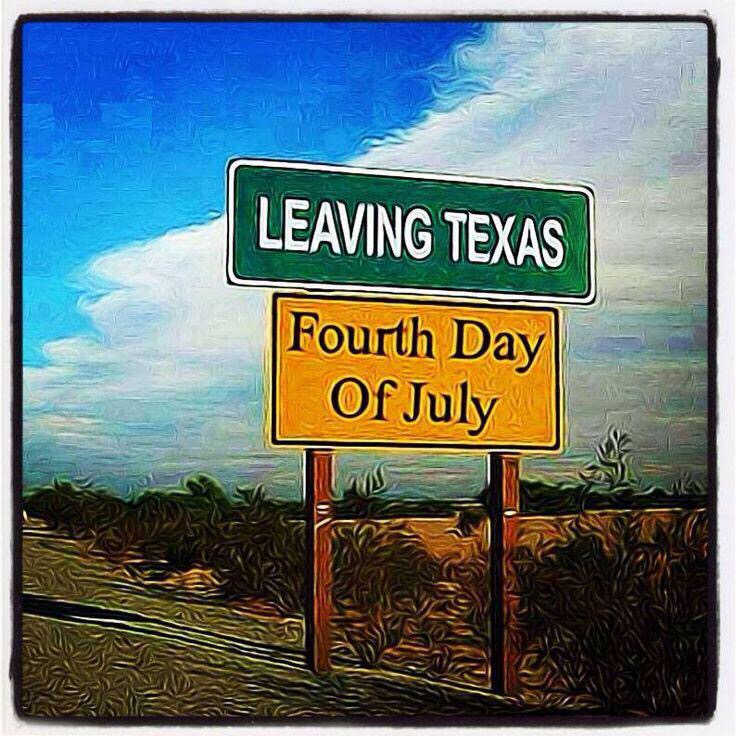
2.       Jack Straw – Good Ole Grateful Dead.  I often spend time thinking about the best Grateful Dead show opener, and always come back to Jack Straw.  A country rocker, with Bob belting out the vocals while Jerry tears it up.  A classic tale narrated by two outlaws, played by Bob and Jerry.  A first person version of Pancho and Lefty.  Robert Hunter, conjuring up the archetypal American cowboy tale:

Leaving Texas
Fourth day of July
Sun so hot, clouds so low
The eagles filled the sky
Catch the Detroit Lightning
Out of Santa Fe
Great Northern out of Cheyenne
3.       Sugaree – Good Ole Grateful Dead.  A prototypical Garcia tune.  Hunter's lyrics are rooted in old blues and folk tunes, updated with Grateful Dead symbolism.  A modern classic.  Jerry's vocals and guitar are front and center the whole way.  It's a song that slowly builds and sweeps you along, eventually getting to the climax without even realizing it.  A sing-along chorus too.  And before you know it, 16 minutes has gone by.


4.       Ramble on Rose – 10/21/78.  Just a classic literary tale from Hunter.  Kind of like Dylan's Desolation Row, taking a bunch of archetypal figures, throwing them all together in a song. It seems self-referential too, with its lines about ragtime bands, and Take me to the leader of the band - always a climactic moment.  The Annotated Grateful Dead's interpretation is more eloquent than any I could come up with:

"Perhaps the main point made by this song is that a lyric doesn't need a firm interpretation in order to be evocative. Depending on the listener, this song could be about American music itself, or about a card game, or about a man saying so long to an immature lover. At least three Jacks are invoked: Jack the Ripper, Jack (of Jack and Jill), and Wolfman Jack, which could easily be construed as constituting a poker hand. Tin Pan Alley, the Blues, Ragtime, Spirituals, Folk, Nursery rhymes, Country & Western, and Rock and Roll are all brought into the song, as noted in subsequent links, below. And the narrator seems to be addressing a lover who is determined to leave him on the subject of growing up, of settling down, of not always trying to find greener grass elsewhere.
How could one person be "just like" so many varied characters and situations? Look at any one person's life, and you will find the answer. There is no black and white answer to this song, just as there is no black and white answer to the questions of life itself. Hunter's hyperbolic use of the "just like" simile is a way of granting us the freedom to find our metaphors where we may, depending on the situation."

Read that twice!


5.       Tennessee Jed – 6/14/76.  Another classic American tune, with that Grateful Dead bounce.  Always wish Johnny Cash would've covered this tune, and loved hearing Levon Helm do it on his album Electric Dirt.  Another archetypal American character: a more rural, southern version of Woody Allen.  The worst criminal in the world.  Everything just seems to go wrong for this poor guy, though you get the feeling he brought it all on himself and had a good time doing it.  Unfortunately, he might not be aware of that.  A sing along, and like Sugaree a song that builds up from a crawl to a climactic jam, getting quite psychedelic in the middle section.  And this is awesome:

My dog he turned to me and he said
Let's head back to Tennessee, Jed


6.       Althea – Jerry Ballads.  More of that bouncy Grateful Dead blues, a classic Garcia riff.  This song made great use of all the pedals and midi effects they came to embrace in the later years.  Hunter reaches into his bag of tricks for line after classic line describing a relationship gone bad, and where the blame lies.  The perfect tune to hear when you're sidling up to the bar, early in the afternoon.  Also, the sole masterpiece on Go to Heaven.


7.       Iko Iko – 10/2/80.  From the acoustic sets they did in 1980, this one at the Warfield.  This is also one of the few tunes from those sets that didn't appear on Reckoning, as they pretty much repeated the same songs night after night.  Most people know the electric versions, always fun, and just how much depending on how excited Jerry would get.  Here's the Grateful Dead take on New Orleans funk, and they manage to bring the energy.  A song that both people tripping and those relatively sober could enjoy, with an undeniable rhythm and ambiguous lyrics.


8.       Been All Around this World – Jerry Ballads.  A dark old folk tune.  And a nice performance.  It speaks for itself.


9.       Deep Elem Blues
10.   KC Moan
11.   Big Boy Pete – 11/17/78.  These three songs are taken from an acoustic benefit show in the Rambler Room at Loyola University in Chicago.  A laid back atmosphere and performance, I believe it's pretty much just Jerry and Bob for most tunes.  Possibly Phil and Mickey joining in for a few tunes.  Some nice banter, they're clearly having fun rediscovering some of these old tunes.  Nice contrast from a typical show.


12.   Little Sadie – 10/31/80.  Another acoustic number they did during the Reckoning era.  I remember when my mom first heard me playing that album; she asked me who it was.  When I told her it was the Dead, she was quite confused.  I wasn't sure if she was happy or disappointed.  "Maybe my son's not a druggie, but he listens to country music.  That's even weirder.  Fuck."


13.   The Music Never Stopped – So Many Roads.  This version is from 10/14/80.  Listen closely and you can hear a composed version of Mind Left Body during the jam section.  Great quasi-self-referential lyrics about a mythical band and their merry followers.  In the beginning of the song, things are looking pretty rough for these folks.  But by the time the music has come and gone, everybody's dancing.  The healing power of music, bringing people together in celebration.


Monday, June 8, 2015

We'll Get There, Vol. 6: Close Encounters

50 Years Dead

In the divisive world of the Grateful Dead, nothing is likely more controversial than one Robert Hall Weir. And while I've for the most part stood on the other side of the fence, by now I've more or less made my peace with Bobby. So I enjoyed the recent documentary on his life, The Other One. I didn't expect anything revelatory, though I felt it did a pretty good job capturing the man within the confines of the medium. But it should be no surprise that others were less satisfied, feeling the movie should've emphasized certain aspects they feel are more essential, based on their perspective or preference. They're not wrong, but the filmmakers wanted to tell a different story, focusing on his search for family among other things. 

The most significant tidbits I took from the film were Bobby's comments on Neal Cassady, and subsequent ponderings on the impact he had on the band's music. Cassady is a slippery character, the hero of On the Road, a Merry Prankster, and inspiration for the song the Other One. Without knowing much about him, he seemed like a charismatic trickster type, a guy who lived life on the edge until he went over it. In the film Bobby characterizes Cassady as having a "multi-dimensional" quality, which he describes as the ability to be in multiple places at the same time, or to live multiple lives simultaneously. What the hell does that mean? He also discusses Cassady's unique communication abilities, which I've heard others describe similarly. According to Bobby, Cassady had the ability to carry out multiple conversations within a group of people simultaneously. That is to say, he would speak one sentence to a group, and it would mean something different to each person, carrying on unique conversations with each person at the same time. Each phrase was received in a unique way by each person. If it's hard to conceive, that's because it's hard to describe. I can't imagine a single sentence that would have multiple significant meanings to each person within a group. 


Let's compare Cassady's communication style to music in general, and the music of the Grateful Dead in particular. If we can agree that music is a type of language, you may say that it is less specific than actual syntax, but that is arguable. Languages and words may speak to the cognitive parts of our minds, but music may communicate specific messages to the emotional, spiritual, creative, etc, parts of our self. Much like Cassady, the musicians in the Grateful Dead, at least when they accessed certain states of consciousness, were each having multiple conversations with one another simultaneously. Jerry was saying something unique to each one of the other members of the band with every note he played, and they were as well to him and each other. Multiple simultaneous conversations within the music. At times, it sounded like cacophony, but when it all clicked together a pattern would appear in the chaos, with all the instruments weaving around each other in a musical fractal.

 And the music would come together as a whole, undoubtedly with particular instruments sticking out more than others depending on each listeners' perception. At these times, the music would communicate something very specific to me, send me a message, trigger a memory, take me on a journey through my psyche. Meanwhile, in a stadium, there would be thousands of other people simultaneously having a similar experience. During these moments, there may be a spontaneous eruption in the audience. "The music is speaking directly to me!" Well, it is, but it isn't. Or it is, but it is also doing the same thing to many other people at the same time. Much like Cassady.

If you've been there, maybe you have some inkling of what I'm talking about. The moments when the band breaks through, and seems to be speaking some ultimate truth that connects us through the ages, helps us access a deeper part of ourselves, feel a connection with humanity or a higher power, and be fully present in the moment. If you think this sounds delusional, consider what else Bobby said regarding hallucinating while playing at the Acid Tests: (paraphrasing) 'it was beyond ESP, we were seeing through each others eyes, hearing through their ears.' I'll have what he's having.


As for "multi-dimensionality," Bobby seems to be describing the concept I understand to be non-duality. In mystic spiritual traditions, non-duality is the state most practitioners aspire to. Basically it entails a loss of individual consciousness or separation from all that is other. There is no distinction between self and other, all are one. Non-duality is a pretty fancy way of saying oneness, isn't it? It can also be described as overcoming the distinction between the spiritual world and the physical world, between the Individual and God.

It sounds similar to what mythologist Joseph Campbell had to say after attending his first Grateful Dead concert: "It doesn't matter what the name of the God is, or whether its a rock group or a clergy. It's somehow hitting that chord of realization of the unity of God in you all, that's a terrific thing and it just blows the rest away."

So did Cassady function in a non-dual state? He didn't seem to be a particularly spiritually oriented being, but that itself is not a requirement for access to non-dual consciousness. In fact, spiritual practice may be an obstacle to overcome in achieving non-duality. For example, Kashmir Shavism believes there are three misconceptions to overcome to access non-duality. The first is the illusion that each person occupies a specific point in space - that one is located only "here" rather than being simultaneously "everywhere." The second misconception is that there are objects and beings separate from oneself - there is a self and there is everything else outside the self. The third misconception is that one must do something to fix the first two problems, such as meditate, pray, etc. The first two are illusions, as we have never actually been separated from the true nature of reality, so there is no need to do anything about it. We are already there, but just don't know it. Did Cassady somehow awaken to this ultimate reality, and find himself functioning in a non-dual state? And is this why people spoke of him with such awe inspiring yet ambiguous terms? Similarly in describing the Dead's music, it has an incredible power that is difficult to describe without falling into cliche. But once in a while, cliches are reality if we look at them right.


I've said more than I've wanted to say in attempting to address a subject that is beyond the scope of this space. Enjoy the latest volume of WGT. Previous volumes are available on the blog.
We're half-way there, yet peering over the edge. See you all on the other side. Let's wrap this intro up with Jerry singing the Maker:


Disc Six: Close Encounters


The band's sound just continues to get bigger, and here they are in full on arena rock band mode.  The amps are all turned up to 11, mounds of coke backstage have been plundered, groupies have been groped, TV's have been thrown off balconies, and why not?  Sure Jerry, go ahead, have another corn dog.  The band was on top of the world, what could go wrong?...  This disc plays nicely as a second set and encore from the era.  I'd recommend putting it on at sunset.


1.       Take a Step Back – Dick's Picks 33.  The Take a Step Back chant appears frequently throughout Grateful Dead history, usually good fun, except for those getting crushed up front.  I would be remiss to not include a version in this set. Take a step back! Take a step back! Take a step back from what? From your mind, man. Check it out.


2.       Samson & Delilah – Dick's Picks 33.  This version has got everything you're looking for with this song.  It starts with the thunderous dual drummers.  Then there's that triumphant, wailing Garcia guitar riff, similar to the one heard previously in St. Stephen, and later in Throwing Stones.  I can't say if this is one of the best versions of the song, but it gets cookin'.


3.       Meet the Jones Gang – Good Ole Grateful Dead.  Just some fun banter from Phil.  A shame they stopped speaking to the crowd much in later years, as it's fun to hear their personalities, and the looseness of it all.


4.       Scarlet Begonias>Fire on the Mountain – Good Ole Grateful Dead.  Yes, this is the classic version from the most notorious show in Grateful Dead lore, Cornell '77.  The band is locked in, throwing the gauntlet down from the get go.  But it's Phil's bass, and whatever effect he is using, that really puts this version over the edge.  Both of these tunes are also great examples of the Grateful Dead sound/bounce.  Jerry said he based Scarlet on Paul Simon's Me & Julio Down By the Schoolyard, and you can hear some rhythmic and melodic similarities, but it doesn't have the crispness that Julio has.  As for Fire, it's the Grateful Dead take on reggae: bright and bubbly.  Put them together and you've got, along with China>Rider, a quintessential Grateful Dead duo. It's 26 minutes of pure ecstasy.  Strap your headphones on, dim the lights, light some incense, take your pants off, and push play
.


5.       Stella Blue – So Many Roads.  This version, from 4/28/78, does a good job of showing how the Dead's sound changed since the previous version of this song on disc 4, recorded in '73.  They sound more like an arena rock band here.  A significant difference is likely that Mickey was back in the fold.  In addition, they probably were a more popular band, playing larger venues.  Something is lost, but something also is gained.  The mellow subtleties have been turned up a few notches.  At the beginning, the band is not all quite on the same page.  But later, when the intensity is ratcheted up, holy shit.  The jam at the end is just rapturous.  The lonesome campfire song of the cosmic cowboy riding the psychedelic freeway out west.


6.       King Solomon's Marbles Jam – Blues for Allah Outtakes.  Just a quick little jam of the Dead working out this complex Phil-penned tune.


7.       Close Encounters – Good Ole Grateful Dead.  This is just Jerry noodling away, solo, from January '78.  The movie had just been released a few months prior, and the band and audience were surely big fans.  Imagine being in the audience tripping your face off, hearing Jerry riff on this piece of inter-species communication.  You'd be pretty sure he was an alien.  Maybe he was.  There really is no better explanation for his genius.

8.       St. Stephen – Good Ole Grateful Dead.  Seamlessly segueing out of Close Encounters, St. Stephen comes slamming along with Jerry rockin' the main riff solo rather than playing the delicate intro.  The rest of the band eventually joins in unison.  The first time I heard the transition into St. Stephen I remember saying "wow" out loud.  It was probably 1992 or 1993, and I was driving in my parents' station wagon down Sheridan Road north of Evanston, IL, listening to the Grateful Dead hour with David Gans.  What a kind motherfucker.  It still is one of the most stunning things I've ever heard the Dead do.  The rest of this version of St. Stephen is unremarkable, maybe a little sloppy, loose at the edges, but fun nonetheless.


9.       Sugar Magnolia – Good Ole Grateful Dead.  A fun and well extended version, clocking in at over 11 minutes.  One of Bob's finest tunes.  Like China Cat, another song that makes me feel like tripping balls out in the sweet summer sun.  They really let this one build, until they're fully locked and loaded, Bob not starting the first verse until after three minutes.  This was both Duane Allman's and Bill Graham's favorite Dead tune.  Who would I be to tell them they're wrong?  Some grooving country rock, with big peaks at the end.  Rock star Bob in full effect, spitting on the crowd, spinning around, strutting to the edge of the stage, doing his little leg kicks.  If you put your pants back on after the Scarlet>Fire, take them off.   Fuck yeah, boogie on!


10.   Brokedown Palace – Garcia Tapes.   This version is from 5/18/77, 10 days after the Cornell Scarlet>Fire.  Just a kind fuckin' tune played really well.  The whole band is restrained and in sync.  Even Donna tones things down for some nice harmonizing.  A perfect encore after a long night of tripping, an organic landing pad, and a chance to catch your breath before stepping back into the "real world."  But certainly a song that could also be of comfort to anyone staring at the walls, living out the dark night of the soul.  A tune to let you know that you are not alone, others have been through this too, you are part of this mystifying cycle of nature that will keep on spinning, and that music can help get you through the pain.  A song of redemption.  Listen to the river sing sweet songs to rock my soul.

I feel and think much as you do, care about many of the things you care about, although most people do not care about them. You are not alone. - Vonnegut

Monday, May 11, 2015

We'll Get There, Vol. 5: High Time

50 Years Dead

Spoiler alert: Mississippi Half-Step did not make the cut on this compilation. I enjoy the song, but it's not a favorite. I just haven't connected with it the way I have connected with other songs. Or I've never had a moment with it, possibly up until recently. I've always wondered why others dig it so much. It's a nice song and all, kind of mellow. The lyrics don't seem to add up to much though, and while the Rio Grand-io refrain is nice, what does it have to do with the rest of the song? 

Rewind to a few weeks back, April 20th, the Stoner Holiday, and I'm driving the streets of Encinitas, CA. Just minding my own business, sober as the pope, running errands, grooving to Dick's Picks 14, from Boston in 1973. On comes Half-Step. At 4:20 into the song, a splice in the audio abruptly occurs. It was jarring, and lasted for what seemed like just a few seconds, although in reality it was closer to 20. Initially, it sounded like the changing of a radio station, guitar strums, and aliens speaking in tongues, or backwards, or what the fuck was that?! I was kind of rattled. Maybe you had to be there. 
Thinking I had stumbled on some kind of Rosetta Stone, I went off on a quest to determine what the hell was going on here. The internet provided no clues, or reports from others who had similar issues with their copies of Dick's Picks 14. Strangely, the audio files I had on my computer did not contain the splice, it was only on the CD's. I'm not sure if the CD's came from that source, but I think they did. Regardless, how did that splice get there? It surely seemed intentional. Was some kind of cosmic joke being played on me? Feeling in the midst of a spiritual emergency, I set to analyze the audio by slowing it down. You can listen for yourself. 
Unfortunately the results were not particularly meaningful. But it did lead me on a path of exploration regarding the song and its origins, which held the profundity I sought. While I still don't quite connect with the song, I appreciate it as a misfits song, and one particularly relevant to Garcia's life story. From the Annotated Grateful Dead page on the song, via Gan's Playing in the Band, Garcia discusses the impact of a friend's death on charting the course of his life: 

"Lost My Boots in Transit, A Pile of Smoking Leather..."

"Events in my life suggested to me that maybe it was going to be my responsibility to keep upping the ante. I was in an automobile accident in 1960 with four other guys...ninety plus miles an hour on a back road. We hit these dividers and went flying, I guess. All I know is that I was sitting in the car and there was this...disturbance...and the next thing I was in a field, far enough away from the car that I couldn't see it.

The car was crumpled like a cigarette pack...and inside it were my shoes. I'd been thrown completely out of my shoes and through the windshield. One guy did die in the group. It was like loosing the golden boy, the one who had the most to offer. For me it was crushing, but I had the feeling that my life had been spared to do something...not to take any bullshit, to either go whole hog or not at all...That was when my life began. Before that I had been living at less than capacity. That event was the slingshot for the rest of my life. It was my second chance, and I got serious."

We go through stages of development in life, and meanings change as our perspectives evolve. The abstract becomes palpable, contradictions lie in balance, rational thought is not quite all it's cracked up to be. If you don't understand what a certain song means yet, don't worry, we'll get there.

Enjoy this round of cosmic slop. Previous volumes echo through eternity, and can be found on the blog. We'll fucking get there. 

"Do I contradict myself? Very well, then I contradict myself, I am large, I contain multitudes."
-Walt Fucking Whitman


Disc Five: High Time

Disc five starts off with a little leftover goodness from '74 before the hiatus in '75, and continues with the next evolution of the Dead's sound.  From '75 on, Mickey is back in the band, and for better and worse this charts a different course for the Dead.  The sound is beefed up, bigger, but more lumbering.  There also seems to be a move away from the mellow country vibe, to space-jazz and arena rock.  Some of the delicacy is lost, but the intensity increases, a possible reflection of what was going on within the band on a personal level.


1.       Bill Graham Introduction – 9/27/69.  Bill Graham was an integral part of the Dead's scene, and his introductions were unique and legendary.  Here's a brief example.


2.       Eyes of the World – 6/18/74.  The first of three tracks from this excellent show, often cited as a favorite among fans.  Trey and some of the guys in Phish have mentioned this as a favorite as well, and you can hear why on this track.  Fluid country-jazz, tight playing, and exploratory.  Possibly not so coincidentally, on the 20th anniversary of this show Phish played what I and many others regard as their greatest show ever at the UIC Pavilion.  Inspiration, move me brightly.


3.       It's a Sin – 6/18/74.  The second track from this show is an instrumental blues jam, played flawlessly; the band digs deep and gets nasty.


4.       High Time – Good Ole Grateful Dead.  I was never a huge fan of this song, but had never heard one from this era.  With Donna on backing vocals, and a more psychedelic sound, this version is really unique and I think stands out from others, which could fall flat.


5.       Blues for Allah outtakes – Same.  Just a funky little instrumental jam from the sessions for Blues for Allah.  Many outtakes from these sessions have leaked out, and they're pretty similar to this, but much longer.  You can hear the band fuckin' around with the sounds and melodies of the songs that would comprise Blues for Allah, but in an embryonic state.  Sonically they were really going for something different with this album, and they took the time to work it out in the studio.


6.       Terrapin Station – Garcia Tapes.  An early version of this tune, another one of the three to be repeated on this compilation.  In the early days, this was more of a folk-prog tune, and is probably the peak of the space-jazz thing they started with Blues for Allah.  Musically, it starts with an entrancing, lilting melody that sucks you in.  Entering the Inspiration portion of the tune, it builds to a triumphant soar, and finally ends up in an other-worldly cosmic sludge during the end jam.  All the way, the music is a perfect match for the lyrics.  Garcia and Hunter's synchronistic writing of this tune has been well documented, so I won't get into that.  Lyrically, the Lady with a Fan portion of the suite is a classic tale, it starts out with very visual imagery: a storyteller sitting around a campfire, conjuring up his muse, and letting the story unfold as the fire glows.  A woman and two suitors. One goes for it, the other takes a pass.  You decide if he was wise.  The storyteller doesn't give an answer, or really give an end to the story, but it leaves you wondering.  Incredibly simple tale, but one we can all relate to.  Archetypal stuff.  The Terrapin Station section of the song is about songwriting and inspiration itself.  That ever elusive thing that's all around us if we just dial in to that rare and different tune.  And what is Terrapin Station?  Some kind of slow moving state of inspiration?  In creating this set, and tapping into the essence of the Dead, as defined by the "We'll Get There" title, I have to wonder if that is what Terrapin is all about.  Reaching for some place or thing, and all the while not realizing that getting there isn't what it's all about.  It's about the journey there, where you are right now.  The journey is the destination.  Inspiration is all around you if you open yourself up to it.

Terrapin - I can't figure out
Terrapin - if it's the end or the beginning
Terrapin - but the train's got its brakes on
and the whistle is screaming: TERRAPIN


7.       Crazy Fingers Jam – Beautiful Jams.  Crazy Fingers is a really cool song.  They took that space-jazz sound, and added some reggae flavor to the mix.  The 70's were when reggae exploded, and Garcia covered a variety of Marley, Tosh, and Jimmy Cliff songs, in addition to reggaefying other tunes like Friend of the Devil.  This jam is from 9/30/76, and features the main theme of the song, and expands on the bright, merry-go-roundesque melody.  It then returns to touch on other key changes in the song.  Particularly enjoyable is the blossoming build-up toward the end.  You'll know it when you hear it.  Just mellow out, light a fatty, and expand your mind, man.  Although the lyrics are not included in this jam snippet, the song treads on some of the same thematic terrain as Terrapin.


8.       Jack-A-Roe – Fallout from the Philzone.  Another classic folk tune to get the Grateful Dead treatment.  Phil wrote in his liner notes that this version was slowed down from how they typically did it, with a nice loping banjo feel.  Couldn't agree more.  This is all about the groove.  Never before have electric guitars sounded so un-rock and roll.


9.       The Wheel – Good Old Grateful Dead.  A cosmic and glorious tune, Garcia's leads channeling Bird.  Lyrically this is a fan favorite, and a message to both the fans and the band:  couldn't you try just a little bit harder, couldn’t you try just a little bit more?  It was also usually both a landing space from and launch pad to some spaced out jams.  Kind of a brief respite in the midst of insanity, some recognizable lyrics to latch onto and make sense of before things get weird again.  Hope you enjoyed it, because now it's time to go a little bit further than you've gone before.   


10.   Wharf Rat – Good Ole Grateful Dead.  This segues right out of The Wheel, a perfect pairing.  Of all the Jerry ballads, in my mind this one takes the cake.  The music is so well composed, beautiful, almost Dark Star-esque in some passages, and intensely dramatic and powerful in others.  The story, and the verses, mirror the music.  This is almost a ballad version of A Day in the Life, like two songs mashed together, but intensely related.  Two different narrators, telling different stories, yet a profound moment of empathy.  The centerpiece of the song being the gospel bridge, with perfect church keyboard accompaniment by Keith, breaking it down for the vocal climax:

But I'll get back
on my feet someday
The good Lord willing
if He says I may
I know that the life I'm
livin's no good
I'll get a new start
live the life I should

      The song finishes off with a jam that finds the band scaling the walls of heaven, busting down the pearly gates.  Dig it!


11.   At a Siding – Jerry Ballads.  Often mislabeled as L'Alhambra (particularly by myself), this is from the Terrapin Station Suite, and appears on the studio version, but was only performed once, on 3/18/77 shortly after Terrapin debuted.  It's a shame they didn't keep on playing it.  It's intense, dramatic, incredibly psychedelic, and as you can hear, very well played.  Who knows why they dropped it from their repertoire?  One can only conclude they melted too many faces the one time it was played, and they had to retire it for the good of the audience.  The show that night is said to have resembled the end scene from Raiders of the Lost Ark where the Nazi's faces all melt off after the ark is opened.  Poor fuckin' Deadheads, just thought they'd trip balls at a Dead show, not get murdered by Jerry Garcia.  Fuck!