Wednesday, August 26, 2015

WGT Vol. 8: Soy Capitán


50 Years Dead

Looking back on the creation of this compilation and how my preferences crystallized, I've also come to understand my dislike for certain material. It's a funny thing talking to other Deadheads about their favorite shows, top tunes, moments, etc. Opinions vary so widely. If the music intersects with our personality, life history, and taste at the right moment, a new favorite may be born. That may partly explain why all these tracks made my compilation but may not be on others' best of lists. 

If that initial exposure to the music is negative though, it can also have a lasting effect. Like a lot of other Heads sorting their way through the Dead's catalog, I fumbled through officially released material and whatever tapes I could get my hands on. It being around 1990, there was surprisingly little in the way of live albums. Live/Dead, Skullfuck, Bear's Choice, Reckoning, and Dead Set. Europe 72 and Anthem, kinda. At this point, I had exhausted all my options, but I had to have more. I had seen it before, sitting on the shelf, but something about it just gave me a bad feeling. Eventually I caved to my addiction, and coughed up the $15 for Steal Your Face. Should've trusted my instinct. 


What a weirdo album. A bunch of country and Chuck Berry covers by Bobby. Some slow Jerry tunes. All muddled in an audio sludge. Hard to believe they were recorded at such legendary shows, Winterland '74. This is what they chose? Really dreadful stuff. I still haven't been able to shake the initial impression some of those tunes gave me. Of the 14 songs on that album, only 7 versions of those tunes made it onto this compilation. I was likely already familiar with Casey Jones and U.S. Blues. Around and Around and Big River are undeniably catchy. Black Throated Wind is vintage Weir, but a bit beyond my years at the time. There are more than enough big versions of Sugaree and Stella Blue out there to melt an icy heart. But Cold Rain and Snow still leaves me kind of cold and wet. I've previously written of my mixed emotions regarding MS 1/2 Step. Promised Land, Beat it on Down the Line, El Paso? No thanks. I'm starting to warm up to Ship of Fools. That song has got potential. Must've Been the Roses will always be a nice tune. 

But for other people, maybe they were lucky enough to hear this batch of songs for the first time from another source. Maybe they caught Cornell '77 or Veneta '72 prior to SYF, and El Paso is elevated to cherished status by the strength of those shows. Or maybe their dad was a big Marty Robbins fan. Or maybe they were just at the right place and time in their lives to break through the sludge and appreciate the genius lying beneath the surface of this album. A summer break in college. The only tapes in your car, along with Tommy and Joshua Tree. A never-ending bag of shake, seeds, and stems. A job that didn't require you do much more than show up. Things could've turned out differently. This could've been an entirely different compilation. Or maybe I would be extolling the virtues of U2. I don't think so. There ain't enough grass in Mendocino County, broseph. 


So enjoy this round of tunes and moments that hit me at the right place and time in my life. If these aren't your favorites, give it a few years, see what happens. Or maybe the stars will align for you now. As always, give it a spin prior to reading below to enjoy the surprises as they come. Previous volumes are in previous blog posts. You know where to find em. See you back here next month for more of the same. 


Disc 8: Soy Capitán
THIS is kind of the "80's" disc, although much of it is probably from the late 80's or early 90's, but whatever.  As I've said, not my favorite era of the Dead, but it has some nice moments, particularly the incorporation of interesting sounds into the music.  This disc is also very Bob Weir and The Other One heavy.  It features several Weir songs that benefited from the sound and playing of the era.  I decided to use The Other One as the thread that holds it all together.  I think it turned out quite nicely as a cohesive whole.
1.       Introduction – 4/23/69.  From a fairly enthusiastic new convert.


2.       We Want Phil – 6/10/90.  Loved to hear those old tapes when the crowd would break out into a "we want Phil" chant, so I had to include one here.  This version includes some nice banter from Phil, as well as Jerry.


3.       Box of Rain – Fallout from the Philzone.  What can I say about this tune?  It's a beautiful song, priceless melody, brilliant lyrics.  Phil wrote the song while his father was dying in the hospital, coming up with the music as he drove back and forth to see him.  Quite a departure from his more avant-garde leanings, the music has a very emotional quality.  Hunter's lyrics were a perfect match, essentially describing what Phil was going through.  I don't think lyrics can get much deeper than this, tapping into existential truths of the human condition.  Thoughts and feelings we all share, with images familiar yet ambiguous enough for each of us to transpose ourselves into the song.  Really genius at work here.  Hunter has said that he came to realize he didn't need psychedelics to tap into his unconscious.  As with many artists, the veil between his conscious mind and the nether regions was thin and more readily accessible than it is to other people.  You can really tell by listening to this song.  It's also my wife Julie's favorite song, and she has requested that I play it at her funeral.  I guess she likes to plan ahead.  An excellent choice.


4.       Shall We Go Jam – Jamming at the Edge.  Just a short little snippet of the Dead teasing Dark Star.  This is with Hornsby, and he seemed to bring the playfulness back out in later years, nudging Garcia to have a bit more fun.


5.       Shakedown Street – Dead Set bonus track.  A dose of Grateful Dead disco funk, bringing some pop influences of the era into their music, and turning it into something absurd.  Love all the different effects they used in this song, kind of a defining song for the late 70's and early 80's.  Some versions tend to drag on and go nowhere, which is cool.  But this version clocks in at about 10 minutes and is straight to the point, no messing around.


6.       Mermelada – Jamming at the Edge.  Also known as Spanish Jam, previously seen on disc 4.  Musically they are similar, but sonically quite different due to the different midi and synth effects used.  This version is like a psychedelic haze, the spaceship getting ready to land.  Very cool indeed.


7.       Estimated Prophet – So Many Roads.  A classic Bob Weir tune from the second half of the Dead's career.  Like Shakedown, it does a great job of incorporating the advances in sounds that the Dead were on top of, and allows Bobby to get loose with his vocals and do some howling.  Classic murky, yet bouncing, reggae guitar line from Garcia too.


8.       Jam out of Foolish Heart – So Many Roads.  Again we see the effect that Hornsby had on the band, and Garcia in particular.  Following Foolish Heart, and preceding drums, Garcia stuck around to jam with Hornsby, with some support from Vince Welnick too.  The jam dances around The Other One melody, exploring it inside and out, without ever really touching on it.  You can really hear them feeding off each other, pushing back and forth, further and further.  Some cool interstellar Floyd type space explored towards the end.


9.       Spanish Lady Jam – Jamming at the Edge.  Another Other One jam.  It was one of, if not, the most played songs in Dead history, for good reason.  There were just so many directions the song could go, fast, slow, weird, into other songs, or who knows.  Again, nice use of the effects in this version.


10.   Throwing Stones – 3/15/90.  A classic late era Bob song, kind of a grownup hippies' call to arms.  A very well composed to song, with various sections.  Bob tells the story, the song builds, Jerry takes off on a soaring riff and solo, ala St. Stephen and Samson, and then a nice vocal breakdown.  After the chaos that typically preceded this song towards the end of a second set, where you might have gotten a bit lost in your head, this song did a good job of pulling you in, helping you focus, sing along, and get down.


11.   Faded Jam – Jamming at the Edge.  This is kind of a hybrid Other One/Not Fade Away jam.  I think it does a great job of showing how the Dead could really get out there and be playful with the up-tempo rockin' stuff too.


12.   West L.A. Fadeaway – Jerry Ballads.  Musically and lyrically a darker version of Althea.  Always a treat to hear, it allowed Jerry to dig deep and get nasty.  Is the song about a mobster, or is it about Jerry searching for a fix.  It was commonly believed that this song was about John Belushi, and his fatal overdose at Chateau Marmont in L.A.  And it could be about that too, but it isn't quite about any of these things really.  But there does seem to be something in the meaning of it, whatever that is, that we can all relate too.  Makes me wanna smoke cigarettes.  Some decadence on the dark side of town.  Hornsby appears on this version too.  This verse appeared in the first live version in 1982, but subsequently vanished:
Here's what Ginger says, she talks like she ain't nobody's fool
Here's what Ginger says, she tries to live by the golden rule
She says you treat people all right,
other people will probably treat you cool

13.   Neal @ The Wheel Jam – Jamming at the Edge.  A very extended jam on the Other One, this version breaking it down, and breaking out the flute synths along with other sonics.  What other rock band lead guitarist played flute synth?  This rendition reveals what Jerry might have described as the patterns existing in chaos.


14.   Good Lovin'>
15.   La Bamba>
16.   Good Lovin' – 9/18/87.  A Good Lovin' with La Babma seamlessly sandwiched in the middle. I believe this would've been around the time the Richie Valens movie, starring Lou Diamond Phillips, came out.  Los Lobos supplied much of the music to that movie, including covering the title song.  Jerry was a fan, and became friends with the band, performing with them live following one of his two comas.  Jerry also exploring his Spanish roots here, and you can tell he's having a helluva time.  Bob turns up the heat in Good Lovin' nicely too.  Just some of that classic Grateful Dead playfulness.


Thursday, July 30, 2015

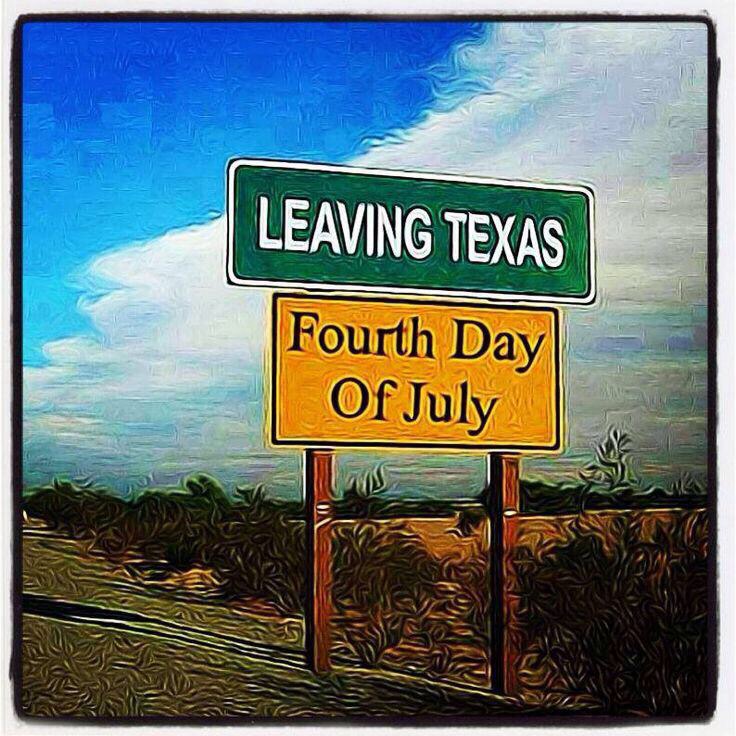
WGT Vol. 7: 4th Day of July

50 Years Dead

One of my favorite things about being a Deadhead is complaining about the Grateful Dead. So while I found the Fare Thee Well shows thoroughly enjoyable, let's get down to brass tacks. We all had Jack Straw as the opener on July 4th, right? 

I would consider Jack Straw the ultimate Grateful Dead show opener, and one of their greatest songs, falling just outside of my top five (China>Rider, Terrapin, Wharf Rat, Ripple, St. Stephen. Yeah, China>Rider counts as one.). Such classic American imagery, and the "Leaving Texas, 4th day of July" line would seem to make perfect sense for the Independence Day show opener. But the Grateful Dead always did have a tendency to confound. So after kicking things off on the 3rd with Box of Rain (who called that?), they busted out their finest show opener to kick the run off properly. In my mind, Box served more as a reprise of the last song played together at Soldier Field, a flashback to where they left off rather than the beginning of the show. And kind of a warm-up, a la Let the Good Times Roll. 


So even though few expected it, Jack Straw was the perfect choice. Such a classic Grateful Dead tale, somewhat self-mythologizing, like many of their great songs, without overtly identifying with the symbolism, a la Truckin' fer instance. Their tale of life on the road, the good times, the lines crossed, the struggle. Also a nice bit of coincidence that this aptly titled volume of my compilation, which I put together several years ago with no plans for release, ended up being put out in July, during with the final shows. More on Jack Straw below.


My only other gripes would be that they left off a few of the classic songs in favor of some lesser tunes. Some people may same the same about this compilation. Beat it, nerds. We knew it wouldn't be possible to squeeze them all in, but it sure seemed like there was time for Goin' Down the Road before Not Fade Away. And no Ramble on Rose? Another classic, triumphant dose of Grateful Dead Americana, left on shelves collecting dust. Maybe the song is too identified with Garcia, and no one else could pull it off, but what a moment it would have been in the crowd to join together on "take me to the leader of the band!" I would've even been down for a Trey midi-trumpet solo. More Ramble on Rose discussion below as well, but I've really been digging the imagery conjured in these lyrics:


Just like Mary Shelly, just like Frankenstein,

Clank your chains and count your change and try to walk the line.


The idea of the monster within us awakening, trying to break free, while still trying to fit into society. Something along the lines of to live outside the law you must be honest, maybe. At least that's what I'm getting from it right now. What a freaking great song. My kids quote the lyrics from time to time. Got them brainwashed already.


As for the rest of Fare Thee Well, they played pretty much five normal Grateful Dead shows. Standard first and second sets for the most part. Drums and Space at every show. You could barely get a second encore out of them on the last night, but what a doozy it was. Not a dry eye in the place, I'm told. What, no, I didn't cry. Not me, never, never. They stuck to the script doing what they do best. A formula, but one that works well. And although I was never as enraged at Pete Shapiro as others seemed to be, I did become more convinced through the whole ordeal that he was a bullshitter in way over his head. In the end, the music was great, a fun celebration, and he pulled it off, even if a significant portion of the fanbase was alienated in the process. But he's a true Deadhead, man... I believe the expression is, pound sand.


Enjoy this month's installment of mind derangement. Previous editions are in previous blog posts. You know where to find em. Give it a listen before you read below. Or don't. It's your life man, makes no difference to me. I'm really not sure if anyone is reading or listening to this stuff at all. 


Seriously, is anyone out there? Hello? Hello?


Disc 7: 4th Day of July

Most of THIS DISC is comprised of the late 70's and early 80's, a time that found the Dead at a crossroads.  Unsatisfied with Keith's playing, due to his insistence on only playing piano, frequent nodding off, and tendency to mimic Jerry's leads, he would be ousted after 1978, along with Donna.  Brent Mydland would join, to replace them both, I guess.  Kind of a strange choice, both musically as well as his personality.  He could play a mean Hammond organ, but this era was known as the Doobie Dead for a reason.  He also seemed like an angry dude.  His swearing rants, often directed at women, just didn't seem to fit into the Grateful Dead vibe.  His songwriting was rather poor as well.  The story goes he was chosen more or less on a whim by Jerry.  Jerry saw him perform once with Bob's band, and said sure, why not.  They didn't do auditions, seek out, or put much thought into a replacement.  Brent just happened to be there.  Equally bizarre is his first appearance.  Before the age of the internet, many didn't even know Keith was out of the band, and no one knew who the replacement was, until Brent walked onstage with them at his first show.  "Who's that guy?  Keith lost some weight."  Hard to imagine.  Jerry had some interesting comments on Brent following his death:

Brent had a deeply self-destructive streak. He didn't have much supporting him in terms of an intellectual life. I mean, I owe a lot of who I am and what I've been and what I've done to the beatniks from the Fifties and to the poetry and art and music I've come in contact with. I feel like I'm part of a continuous line in American culture, of a root. But Brent was from the East Bay, which is one of those places that is like nonculture. There's nothing there. There's no substance, no background. And Brent wasn't a reader, and he hadn't really been introduced to the world of ideas on any level. So a certain part of him was like a guy in a rat cage, running as fast as he could and not getting anywhere. He didn't have any deeper resources. My life would be miserable if I didn't have those little chunks of Dylan Thomas and T.S. Eliot. I can't even imagine life without that stuff.

Musically, the Dead seemed confused in this era.  They did some acoustic shows, splendid indeed, but returning to your roots can be a sign of a band in search of an identity.  I'm not sure what the hell Go to Heaven is a sign of, but it's nothing good.  They coasted through much of the 80's, without much new material or any sonic breakthroughs.  Some good moments, for sure, but never a decade I spend time listening too.  The recordings, particularly the vocals, from this era also sound odd.  Shit, I'm getting depressed.  Anyway, think of this disc as kind of a first set, a lot of the great storytelling tunes, with a few of the highlights from the beginning of this era.


1.       Bill Graham Introduction – 11/19/66.  A few words from our sponsor.


2.       Jack Straw – Good Ole Grateful Dead.  I often spend time thinking about the best Grateful Dead show opener, and always come back to Jack Straw.  A country rocker, with Bob belting out the vocals while Jerry tears it up.  A classic tale narrated by two outlaws, played by Bob and Jerry.  A first person version of Pancho and Lefty.  Robert Hunter, conjuring up the archetypal American cowboy tale:

Leaving Texas
Fourth day of July
Sun so hot, clouds so low
The eagles filled the sky
Catch the Detroit Lightning
Out of Santa Fe
Great Northern out of Cheyenne
3.       Sugaree – Good Ole Grateful Dead.  A prototypical Garcia tune.  Hunter's lyrics are rooted in old blues and folk tunes, updated with Grateful Dead symbolism.  A modern classic.  Jerry's vocals and guitar are front and center the whole way.  It's a song that slowly builds and sweeps you along, eventually getting to the climax without even realizing it.  A sing-along chorus too.  And before you know it, 16 minutes has gone by.


4.       Ramble on Rose – 10/21/78.  Just a classic literary tale from Hunter.  Kind of like Dylan's Desolation Row, taking a bunch of archetypal figures, throwing them all together in a song. It seems self-referential too, with its lines about ragtime bands, and Take me to the leader of the band - always a climactic moment.  The Annotated Grateful Dead's interpretation is more eloquent than any I could come up with:

"Perhaps the main point made by this song is that a lyric doesn't need a firm interpretation in order to be evocative. Depending on the listener, this song could be about American music itself, or about a card game, or about a man saying so long to an immature lover. At least three Jacks are invoked: Jack the Ripper, Jack (of Jack and Jill), and Wolfman Jack, which could easily be construed as constituting a poker hand. Tin Pan Alley, the Blues, Ragtime, Spirituals, Folk, Nursery rhymes, Country & Western, and Rock and Roll are all brought into the song, as noted in subsequent links, below. And the narrator seems to be addressing a lover who is determined to leave him on the subject of growing up, of settling down, of not always trying to find greener grass elsewhere.
How could one person be "just like" so many varied characters and situations? Look at any one person's life, and you will find the answer. There is no black and white answer to this song, just as there is no black and white answer to the questions of life itself. Hunter's hyperbolic use of the "just like" simile is a way of granting us the freedom to find our metaphors where we may, depending on the situation."

Read that twice!


5.       Tennessee Jed – 6/14/76.  Another classic American tune, with that Grateful Dead bounce.  Always wish Johnny Cash would've covered this tune, and loved hearing Levon Helm do it on his album Electric Dirt.  Another archetypal American character: a more rural, southern version of Woody Allen.  The worst criminal in the world.  Everything just seems to go wrong for this poor guy, though you get the feeling he brought it all on himself and had a good time doing it.  Unfortunately, he might not be aware of that.  A sing along, and like Sugaree a song that builds up from a crawl to a climactic jam, getting quite psychedelic in the middle section.  And this is awesome:

My dog he turned to me and he said
Let's head back to Tennessee, Jed


6.       Althea – Jerry Ballads.  More of that bouncy Grateful Dead blues, a classic Garcia riff.  This song made great use of all the pedals and midi effects they came to embrace in the later years.  Hunter reaches into his bag of tricks for line after classic line describing a relationship gone bad, and where the blame lies.  The perfect tune to hear when you're sidling up to the bar, early in the afternoon.  Also, the sole masterpiece on Go to Heaven.


7.       Iko Iko – 10/2/80.  From the acoustic sets they did in 1980, this one at the Warfield.  This is also one of the few tunes from those sets that didn't appear on Reckoning, as they pretty much repeated the same songs night after night.  Most people know the electric versions, always fun, and just how much depending on how excited Jerry would get.  Here's the Grateful Dead take on New Orleans funk, and they manage to bring the energy.  A song that both people tripping and those relatively sober could enjoy, with an undeniable rhythm and ambiguous lyrics.


8.       Been All Around this World – Jerry Ballads.  A dark old folk tune.  And a nice performance.  It speaks for itself.


9.       Deep Elem Blues
10.   KC Moan
11.   Big Boy Pete – 11/17/78.  These three songs are taken from an acoustic benefit show in the Rambler Room at Loyola University in Chicago.  A laid back atmosphere and performance, I believe it's pretty much just Jerry and Bob for most tunes.  Possibly Phil and Mickey joining in for a few tunes.  Some nice banter, they're clearly having fun rediscovering some of these old tunes.  Nice contrast from a typical show.


12.   Little Sadie – 10/31/80.  Another acoustic number they did during the Reckoning era.  I remember when my mom first heard me playing that album; she asked me who it was.  When I told her it was the Dead, she was quite confused.  I wasn't sure if she was happy or disappointed.  "Maybe my son's not a druggie, but he listens to country music.  That's even weirder.  Fuck."


13.   The Music Never Stopped – So Many Roads.  This version is from 10/14/80.  Listen closely and you can hear a composed version of Mind Left Body during the jam section.  Great quasi-self-referential lyrics about a mythical band and their merry followers.  In the beginning of the song, things are looking pretty rough for these folks.  But by the time the music has come and gone, everybody's dancing.  The healing power of music, bringing people together in celebration.